PW1100G Engine Design and Service Challenges
The Pratt & Whitney PW1100G engine has reshaped industry expectations in aircraft propulsion by merging innovative geared turbofan technology with an ambitious vision for fuel efficiency and lower emissions. However, integrating such advanced technology required airlines and maintenance providers to adapt to new operational protocols and upkeep procedures that differ significantly from those of conventional engines.
Long before the PW1100G became a production engine, Pratt & Whitney was actively exploring breakthrough concepts. In the summer of 1993, the company tested its 53,000 lbf (240 kN) Advanced Ducted Propulsor (ADP) demonstrator at the NASA Ames wind tunnel. This pioneering test utilized a 4:1 gearbox rated at 40,000 hp (30,000 kW) and featured a 118.2-inch (300 cm) fan equipped with 18 reversing pitch composite blades, achieving an impressive 15:1 bypass ratio.
The demonstrator aimed to cut fuel consumption by 6–7%, reduce emissions by 15%, and lower noise levels through a reduced fan tip speed of 950 ft/s (290 m/s) compared to the 1,400 ft/s (430 m/s) typical of conventional 5:1 bypass turbofans. Although the gearbox and larger fan increased weight, Pratt & Whitney mitigated this by raising the use of composites from 15% to 40% by weight. Building on this success, in 1994 the company planned to test a 60,000 hp (45,000 kW) gearbox designed to deliver up to 75,000 lbf (330 kN) of thrust, laying a critical foundation for future engine developments.
Development of Geared Turbofan Technology
At the dawn of 2006, as the once-celebrated budgets for NASA’s aeronautics research were slashed, Pratt & Whitney, with a quiet resolve, pledged $100 million per year to the development of the geared turbofan (GTF), a bold gamble for the next generation of single-aisle airliners. The numbers were alluring, promising thrusts in the 25,000–35,000 lbf range, and with it, the hope of reshaping an entire industry. At that moment, Pratt & Whitney powered 36% of the engines in the Western-operated commercial fleet. Yet, this dominance was already waning, fading as the older, well-worn JT8D engines were slowly being retired. Their place was being claimed by newcomers, such as CFM, with its steady rise, GE’s quieter, yet inevitable presence, and Rolls-Royce’s own measured ambitions.
And still, in the face of encroaching competition, P&W remained undeterred. Their dream was cast in numbers that danced between the realms of hope and reality — a 12% reduction in fuel burn, a 31 dB drop in noise — numbers that promised not only progress but a new chapter for air travel. With the GTF, they imagined a world of efficiency, where the hum of engines would no longer intrude on the serenity of flight. As the year unfolded, P&W set their sights on a ground engine demonstration by late 2007, a demonstration that would show the world a fan measuring an ambitious two meters in diameter and a thrust of 30,000 lbf.
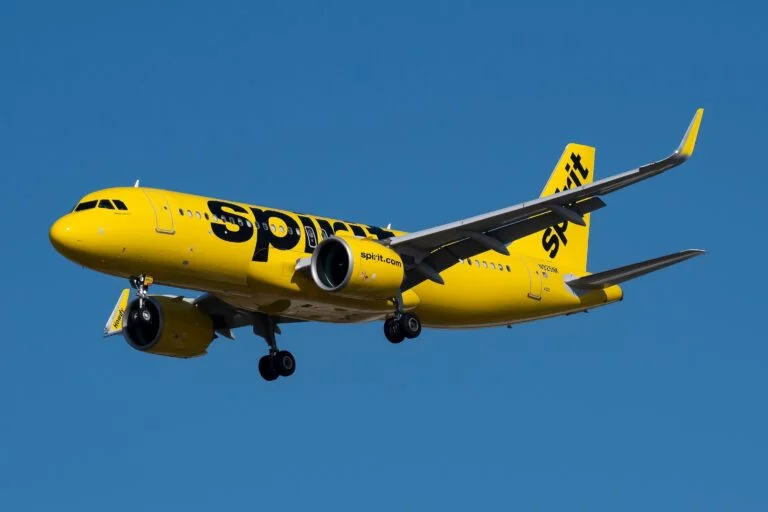
By decoupling the fan from the low-pressure turbine with a reduction gearbox, the PW1100G allowed each component to operate at its optimal speed. This breakthrough resulted in approximately a 16% reduction in fuel consumption and significantly lower emissions relative to previous-generation engines. In 2010, Airbus selected the PW1100G engine for its A320neo program, and by 2016, Lufthansa had become the engine’s launch customer, marking its entry into commercial service.
Lessons Learned from a Challenging Launch
Early operational feedback pointed to issues like extended engine start-up times that impacted aircraft turnaround and scheduling. More critically, durability concerns emerged around key components such as the high-pressure compressor (HPC), combustor liners, and the innovative fan-drive gear system (FDGS). Instances of premature wear led to unscheduled maintenance events and in-flight shutdowns, prompting regulatory interventions, including airworthiness directives from the European Union Aviation Safety Agency (EASA) aimed at improving HPC rotor reliability.
By November of 2016, Pratt & Whitney had wrestled the issues of engine start time into submission, with ambitions to deliver 150 powerplants by year’s end, which was 50 engines fewer than the original goal. This shortfall was traced to a troubling yield of fan blades, fewer than one-third of which passed inspection in the early months, a stark contrast to the 75% success rate in more recent tests. Yet, despite this setback, the company set its sights higher for 2017, targeting between 350 and 400 engine deliveries. And fuel-burn performance? It had surpassed expectations, outperforming the IAE V2500 baseline by 16%, with the best cases reaching a remarkable 18% improvement.
However, the GTF’s rocky start left the door wide open for its competitors. Customers, seeking reliability over promise, gravitated toward the CFM LEAP, which secured 396 orders for the A320neo between January and August of 2017. In contrast, the GTF (despite its groundbreaking design) only managed a modest 39. By July of that year, nearly half of the GTF-powered A320neos were grounded for at least a week, while only 9% of LEAP engines faced similar downtime. The toll was evident: the GTF’s market share dipped from 45% to 40% in 2016, though a sizable 1,523 aircraft, or about 29%, remained undecided. Still, by August, Pratt & Whitney’s order book stood at a promising 8,000 engines, with 1,000 of those destined for non-Airbus aircraft.
By late October 2017, Pratt reached a new milestone, achieving a near-perfect 99.8% dispatch reliability. The company stayed on course to meet its delivery goals for the year, having shipped 254 engines, including 120 in the third quarter. But the journey wasn’t without its hurdles. Between 12% and 15% of the engines had been diverted for spares, as issues with carbon air seals and combustor liners — both prone to accelerated wear — required unexpected engine removals. Despite these challenges, Pratt & Whitney was undeterred, eyeing a future where over 2,500 GTF engines would be delivered from 2018 to 2020, and over 10,000 by 2025. In the world of aviation, where every decision sways between precision and patience, Pratt’s resolve was unshaken. The game, it seemed, was far from over.
Maintenance protocols for the PW1100G engine have evolved to address the unique demands of its sophisticated design. Pratt & Whitney’s maintenance manuals prescribe a rigorous schedule of inspections and servicing procedures that emphasize the health of the FDGS through systematic oil debris analysis and vibration monitoring.
The PW1100G Engine Path to Innovation and Maintenance Evolution
Detailed disassembly processes for gearbox overhauls are critical, with strict contamination control measures in place to prevent foreign debris from compromising sensitive components. In addition, regular inspections of the HPC focus on blade tip clearances and coating conditions to preempt performance degradation, while the combustor liner, which is prone to early degradation, requires more frequent replacement cycles than initially anticipated. Maintenance teams also closely monitor thermal stress in the turbine section, particularly during high-cycle operations, to avert potential failures.
Supply chain constraints add another layer of complexity. Demand for replacement parts, especially for HPC components and FDGS spares, has often exceeded supply, resulting in longer periods with aircraft on ground. Many operators have arranged for spare engine leases to mitigate these delays. In response, Pratt & Whitney has implemented software updates to streamline engine start-up procedures and enhance overall operational efficiency. Material improvements and the deployment of tools, which are capable of analyzing real-time engine data, further help ease the risk of unexpected failures.
The journey of the PW1100G reflects the complex nature of progress in aviation. While the engine has reshaped how the industry approaches fuel efficiency and emissions, it also sheds light on the practical hurdles that come with any major technological shift. The PW1100G isn’t just another engine as it is more of a marker of where the aviation industry finds itself today: caught between the promise of cleaner, more efficient air travel and the realities of keeping sophisticated machinery running smoothly.
A Journey of Refining Technology and Operational Strategy
What the PW1100G offers in terms of fuel savings and reduced noise levels, it demands in maintenance and operational adjustments. Airlines and maintenance providers have had to adapt their strategies to handle the unique demands of the engine, and that, sometimes, was at the cost of increased downtime and higher-than-expected service needs. In that sense, the engine has become a reflection of a larger challenge in aviation: how do we balance the desire for technological progress with the need for reliability and performance?
As the PW1100G engine continues to serve, it’s clear that its impact will be measured not just by its ability to reduce fuel consumption or emissions, but by how well the industry learns to work with its quirks and complications. The path forward is one of refining and adapting, an ongoing conversation between engineers, operators, and maintenance teams. With every adjustment and improvement, the hope is that the PW1100G will move closer to fulfilling its original promise while demonstrating that even the most advanced systems need time to find their place in the real world.
Ultimately, the story of the PW1100G will not only be about its engineering specifications, but about the ways in which it has forced the industry to rethink how we approach the future of aviation. It is a reminder that progress isn’t always linear, but it’s always moving forward, shaped by those who are willing to address the challenges head-on, one engine overhaul at a time.